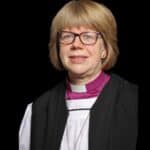

A 16-year-old was raped by a priest. Decades later, now a priest himself, he told five senior clergy, eight times, in writing and in person. The Church of England responded with prayers, procedural technicalities, a review that took six years, and a former archbishop who announced that safeguarding does not trump church law. Welcome to safeguarding, Church of England style.
The Church of England has spent years assuring the public that safeguarding is a priority. It has produced policies, commissioned reviews, hired specialists, apologized, promised that lessons would be learned, and generated enough paperwork to leave a small forest in mourning.
Then there is the Rev. Matthew “Matt” Ineson.
Ineson’s case has everything: horrific abuse, repeated disclosures to bishops who did nothing, disciplinary complaints that died on a technicality, a national public inquiry, a church-commissioned review the survivor refused to touch, and a peer of the realm who read the findings and decided the reviewer simply didn’t understand how bishops work.
If the Church of England wanted a case study in how to lose the trust of survivors, it could hardly have done better.
A teenager, a priest, and six criminal charges
In 1984 and 1985, Ineson was a vulnerable 16-year-old living in the home of the Rev. Trevor Devamanikkam, then a priest at St. Aidan’s, Bradford. According to Ineson, Devamanikkam repeatedly raped and sexually assaulted him.
In 2017, Devamanikkam was charged with three counts of rape and three counts of indecent assault. He was due in court in June 2017. He never showed up; he was found dead at his home that day, and an inquest found he had died by suicide.
So there was no conviction. But the absence of a conviction is not the absence of a finding. When the church’s own commissioned review finally appeared in 2023, reviewer Jane Humphreys concluded that Ineson was sexually abused by Devamanikkam.
Hold onto that. The church’s own reviewer accepted the abuse happened. What follows is the story of what the church did about it, which is to say, very little.
Ineson told the bishops. Then he told them again. And again.
Ineson was ordained himself and, in 2012 and 2013, began disclosing the abuse to senior clergy. By his count, he told five senior clerics on eight separate occasions. The list reads like a roll call of the northern province:
- Peter Burrows, then Bishop of Doncaster, who Ineson says was the first bishop he told
- Steven Croft, then Bishop of Sheffield, now Bishop of Oxford
- Martyn Snow, then Archdeacon of Sheffield and Rotherham, now Bishop of Leicester
- Glyn Webster, Bishop of Beverley
- John Sentamu, then Archbishop of York
In June 2013, Ineson put it in writing: a letter to Croft describing the abuse, copied to Sentamu, Webster, and the President of Tribunals. Sentamu was the only one who replied. He sent prayers and good wishes.
How touching. A priest reports being raped as a teenager, and the second-most-senior cleric in the Church of England responds with the ecclesiastical equivalent of a greeting card.
Croft’s explanation, offered a decade later, was that Ineson’s disclosure was merely “a passing reference” during a pastoral phone call, and that he had not understood it as a formal disclosure. One wonders what Croft imagined a formal disclosure of child rape would sound like. Perhaps it requires a notarized form.
Nobody referred anything to a safeguarding adviser. Nobody checked whether Devamanikkam, still alive and still in the community, posed a risk to anyone else. Ineson believes he did.
The Clergy Discipline Measure rides to the rescue. Of the bishops.
In 2017, Ineson filed complaints under the Clergy Discipline Measure (CDM) against Devamanikkam, against retired Bishop Roy Williamson (whom he alleged knew of the abuse at the time), and against the senior clergy who had sat on his disclosures. He had delayed the latter at police request while the criminal investigation was underway.
Here the church’s disciplinary machinery demonstrated its most reliable talent: making accountability impossible precisely when it matters.
Under the CDM, complaints had to be filed within 12 months of the conduct in question. Since 2016, that limit no longer applies to allegations of child sexual abuse. But it very much still applied to complaints that a bishop had failed to act on a disclosure of child sexual abuse.
Read that again. Raping a child: no time limit. Ignoring a report that a child was raped: twelve months, and the clock has been running since before you worked up the courage to complain.
The President of Tribunals wrote to each respondent asking whether they would consent to the complaints proceeding out of time. Not one of them agreed. Extensions were granted only for the complaints against Devamanikkam and Williamson. The complaints against the bishops who had received the disclosures were dead on arrival.
The government’s Independent Inquiry into Child Sexual Abuse (IICSA) later cited Ineson’s case as demonstrating the “potential difficulties” of applying a time limit to safeguarding complaints. That is a remarkably polite way of saying the calendar was weaponized to protect senior clergy from scrutiny.
One might reasonably ask whether a disciplinary system that produces this outcome is designed to deliver justice or to spare the episcopate uncomfortable questions. One might, but one already knows the answer.
IICSA finds a church with a culture problem
In July 2019, Ineson gave evidence to IICSA, which examined the Church of England’s handling of abuse allegations, its disciplinary procedures, and its treatment of survivors.
The inquiry’s 2020 report on the Anglican Church found that deference to clerical authority, a reluctance to talk about sexual abuse, and greater sympathy for alleged perpetrators than for survivors had together created a culture in which abuse could be concealed.
That matters because the Church of England has spent two decades framing every safeguarding failure as an isolated mistake fixable with another training module and another round of soothing statements. IICSA said otherwise. The problem is not that a few individuals need retraining. The problem is the institution.
An independent review, provided the church gets to run it
The church first promised a lessons-learned review in September 2017, shortly after Devamanikkam was charged. It took until November 2019 to announce the reviewer, Jane Humphreys, a senior social care consultant and former director of children’s and adults’ services.
Ineson wanted nothing to do with it. He had already called the proposed review “worse than useless” and a sham, and he declined to participate. His objection was not to Humphreys personally. It was to the idea that an institution under examination should get to commission, scope, and schedule the examination of itself.
He had a point. Survivors are endlessly told their voices matter, right up until the moment they ask who controls the process.
Then the review took years. In February 2022, the church acknowledged delays. Publication finally came on May 11, 2023, nearly six years after the review was first promised, a decade after the disclosures, and nearly 40 years after the abuse.
Humphreys herself said the review had taken far too long and was well overdue. Nothing says urgency like spending six years reviewing why the church failed to act promptly.
The 2023 review: inexcusable
The findings were damning. Humphreys concluded that Ineson had been abused, that senior clergy had failed to act on his disclosures, and that the policies in place at the time, had anyone bothered to follow them, would have made the review unnecessary. She called the lack of support Ineson received inexcusable.
She found that Sentamu, as recipient of the letter, should have sought advice from his diocesan safeguarding adviser. She found that Croft did not act sufficiently on the disclosures and that nothing was put in place to protect others. She noted that some senior clergy seemed more exercised about the disciplinary complaints against them than about the safeguarding concerns those complaints raised, and that there was a marked reluctance to apologize formally to Ineson.
She recommended, among other things, an institutional apology, proper support for the survivor, and clear guidance to clergy about what to do when copied into an allegation of abuse. That the church’s senior leaders needed written instructions on what to do when told about child rape tells you most of what you need to know.
Bishop Joanne Grenfell, the lead safeguarding bishop, said the church should be ashamed and that it was “truly sorry.” Croft wrote to his clergy the same day acknowledging a “costly” mistake and apologizing for the harm it caused.
Those admissions mattered. But an apology is not accountability, and a review is not a remedy. Ineson promptly called for Croft’s resignation. Croft remains Bishop of Oxford.
Sentamu: Safeguarding is important, but church law comes first
And then there was John Sentamu, by now Lord Sentamu of Lindisfarne and Masooli.
Rather than accept the findings, Sentamu attacked them. The reviewer, he said, had shown a lack of understanding of how dispersed authority works in the Church of England. Then came the sentence that will follow him for the rest of his life:
“Safeguarding is a very important matter, but it does not trump Church law.“
There it is. Years of insisting that safeguarding is everyone’s responsibility, and the moment an independent reviewer criticized a former archbishop, the response was to reach for the canons.
Humphreys had anticipated this. Her report states that no church law excuses an individual from acting on a safeguarding matter. That is not a radical proposition. It is the entire point of safeguarding.
Sentamu is entitled to his jurisdictional argument, and it is true that an archbishop does not hold direct disciplinary authority over every cleric in his province. But nobody asked Sentamu to discipline anyone. The question was whether, on learning that a priest in his province had been raped as a boy by another priest, he should have picked up the phone to a safeguarding adviser. The answer is not complicated, and it does not require a canon lawyer.
Remarkably, the system then did something it almost never does: it imposed a consequence. Within a week, the Bishop of Newcastle, Helen-Ann Hartley, directed Sentamu to step back from ministry as an honorary assistant bishop in her diocese. Sentamu subsequently resigned as chair of Christian Aid, citing concern that the controversy would become a distraction.
Note what triggered the consequence. Not the failure to act in 2013. The refusal to accept criticism of it in 2023. In the Church of England, mishandling a rape disclosure is survivable. Declining to say sorry about it on camera is not.
A survivor who refused to disappear quietly
Ineson waived his anonymity, testified before a national inquiry, filed complaints against an archbishop, called the church’s own review a sham, and has spent a decade publicly demanding that bishops resign. In 2017, he staged a protest at York Minster during General Synod. In December 2024, when Croft said it was right for Archbishop Justin Welby to resign over the Smyth scandal, Ineson called him a hypocrite.
He has since left the church.
Survivors should not have to become full-time campaigners to obtain an adequate response to a report of abuse. They should not have to master the Clergy Discipline Measure, file subject access requests, report the National Safeguarding Team to the Information Commissioner, and recount their trauma to a public inquiry simply to secure an acknowledgment that something went wrong.
Ineson did all of those things. The church still took six years to produce a review he wouldn’t participate in and an apology he had been told, in an internal email, would not be forthcoming until the legal case was settled.
The church is still promising reform
The Church of England says it is fixing this. In February 2025, General Synod voted for greater independence in national safeguarding. In February 2026, Synod endorsed, near-unanimously, moving safeguarding into a new independent national charity, provisionally called the Independent Safeguarding Authority, with external scrutiny and an ombudsman service. The Charity Commission has been leaning on the church to get on with it.
These may turn out to be real changes. But the Church of England has an unbroken record of identifying problems, commissioning reviews, and announcing improvements. Its record of holding senior leaders accountable is considerably thinner.
Consider the scorecard from this one case. A bishop acknowledged a costly mistake and kept his job. An archbishop rejected the findings and lost an honorary role he didn’t need. The survivor got an apology ten years late and a review he regarded as a whitewash. The abuser is dead.
Everyone has promised to learn lessons. Nobody has been held to account for failing to learn the last set.
The real lesson of Matt Ineson’s case
The most disturbing part of Ineson’s story is not that a priest raped a teenager. Predators exist in every institution. The disturbing part is what happened when the teenager grew up, became a priest, and asked the church to do its job.
He told five senior clergy. He wrote it down. He filed complaints. He testified under oath. And the institution’s response, over a decade, was prayers, a time bar, a six-year review, and a former primate explaining that canon law outranks child protection.
The Church of England cannot credibly claim safeguarding is central to its mission while its most senior figures treat it as subordinate to procedure. Nor can it expect survivors to trust processes that work so much better at shielding bishops than at delivering accountability.
Ineson did not create the Church of England’s safeguarding crisis. He exposed it. The church’s response has been a masterclass in speaking fluently about compassion while failing to practice it whenever practice becomes inconvenient.
The Church of England needs fewer assurances that lessons have been learned and more evidence that anyone has actually been held accountable.
Safeguarding is not a public relations exercise. It is a responsibility. And it should not take another independent review for the bishops to grasp the difference.