
Opinion | By Stinkbomb, deputy editor of Anglican Watch and Episcopal priest. (And for some of the more limited out there, no, my real name is not Stinkbomb. But I’ve had the handle since I was, like, 12. So it works.)
With editor Eric Bonetti away until Monday, I’m taking the opportunity to say a few things about the ongoing debacle involving the Rev. Jonathan “Johnny Boy” Adams, formerly of Trinity Episcopal Church in Upperville, Virginia. (Eric will probably regret skipping town, but that’s an entirely different discussion.)
And as an Episcopal priest, I have something to say that may make a few fellow Episcopalians uncomfortable.
One of the few things more disappointing than the allegations against Adams is the response of some church members.
Not everyone, certainly. We’ve heard from people who understand the seriousness of the allegations and the need to protect children. Some have demonstrated considerable courage.
Others? Good grief.
When loyalty to a priest matters more than children
Since Anglican Watch began investigating Adams, we’ve received messages from Episcopalians across Northern Virginia, including people from the area where Eric formerly attended church.
Many have said things along the lines of, “Eric, you used to be such a cool guy. What happened? Was it your negative experience with church?”
Well, yes. Eric has had a profoundly negative experience with the Episcopal Church. He’s discussed it publicly, including in his deeply personal essay, “Can we talk? My experience with abuse, PTSD, depression and the holidays.”
While Eric probably wouldn’t say this himself, I will: His experiences have given him considerable insight into the institutional church’s tendency to protect itself and its clergy at the expense of people who report misconduct.
But here’s what fascinates me.
Virtually all of the people questioning Eric’s motives seem perfectly comfortable assuming Johnny Boy is innocent.
Not because they’ve reviewed the evidence. Not because they’ve spoken with complainants. Not because they’ve independently investigated the allegations.
Apparently, they just know.
How convenient. And how profoundly irresponsible.
The dirt is still under the rug
One reader understood the problem years ago.
In December 2022, a commenter identified as John responded to Eric’s article about spiritual abuse and PTSD. Citing research into clergy misconduct and diocesan responses, John observed:
“The dirt is there, it’s hurting people and its causing a lot of anger in the pews.”
John also thanked Eric for his work, recognizing that calling the church to accountability had brought him considerable suffering.
Nearly four years later, we’re watching the same institutional reflexes play out in Upperville.
The complainant becomes the problem. The whistleblower supposedly has an agenda. The institution retreats behind confidentiality. And parishioners reassure themselves that Father So-and-So would never do anything wrong.
Apparently, some Episcopalians haven’t learned a damned thing.
What part of protecting children is so difficult?
Let’s review the facts.
The Fauquier County Sheriff’s Office investigated allegations concerning Adams. Although investigators found insufficient evidence of criminal conduct, a detective described the reported pattern of behavior as “typical grooming behavior.”
Meanwhile, the Episcopal Diocese of Virginia acknowledged that its investigation found conduct inappropriate for a member of the clergy. Adams returned to ministry under a disciplinary Accord whose specific directions have not been publicly disclosed. He subsequently left Trinity in October 2026.
Adams has denied wrongdoing. No criminal charges resulted from the sheriff’s investigation.
But the absence of criminal charges does not establish that someone is safe around children. Nor does it erase the diocese’s own findings.
Yet some Episcopalians seem more interested in defending a priest’s reputation than asking whether children might be at risk.
I have a few questions:
- Why would anyone place personal assumptions about a priest ahead of a child’s welfare?
- Why does a priest’s popularity outweigh documented safeguarding concerns?
- Why attack the messenger instead of examining the evidence?
- And what, precisely, would it take to put children first?
These should be easy questions for Christians.
Apparently, they aren’t.
Clericalism is not Christianity
As a priest, I find this blind clericalism particularly offensive.
Ordination does not confer moral superiority. A clerical collar is not evidence of innocence. And a charming personality, impressive sermons, or decades of parish service do not establish that someone is safe around children.
Yet Episcopalians routinely behave as though clergy deserve a presumption of personal virtue that ordinary people must earn.
That’s not Christianity. That’s idolatry with better vestments.
Jesus didn’t instruct his followers to protect the institution at all costs. Nor did he suggest that safeguarding children was optional when the accused happened to be a popular priest.
Quite the opposite. Matthew 18:6 contains one of his sternest warnings about causing little ones to stumble.
Perhaps we should spend less time polishing the silver and more time taking that warning seriously.
And let’s dispense with another tiresome argument: Protecting children does not require abandoning fairness to the accused.
A priest can receive due process while a church takes credible allegations seriously, maintains appropriate safeguards, and communicates honestly with parents.
Those obligations are entirely compatible.
That some church members seem unable to grasp this is astonishing.
With Christians like these, who needs enemies?
What makes the Upperville situation particularly disturbing is that the behavior isn’t unique to Upperville.
Across the Episcopal Church, the same pattern repeats: Clergy misconduct is alleged, institutional defenses go up, and the people raising concerns find themselves ostracized or attacked.
All while church members congratulate themselves on belonging to a loving, inclusive Christian community.
It’s enough to make one wonder whether we’ve confused Christianity with membership in a particularly dysfunctional country club.
Meanwhile, bishops and other church leaders express surprise when people leave.
Really?
People recognize hypocrisy. They recognize institutional self-interest. And they certainly recognize when a church cares more about its reputation than about people who may have been harmed.
To paraphrase the old saying, with Christians like these, who needs enemies?
This is why the church is dying
As an Episcopal priest, I love much about our tradition: its liturgy, music, intellectual heritage, and professed commitment to respecting the dignity of every human being.
But I’m increasingly disgusted by the distance between what we profess and how we behave.
We talk endlessly about evangelism, declining attendance, stewardship, and the future of the church.
We commission studies, hold conferences, develop strategic plans, and spend money on consultants.
And somehow, we overlook the obvious.
People aren’t going to trust a church that cannot be trusted to protect children.
Nor should they.
The Episcopal Church’s decline has multiple causes. But its tolerance of clericalism, institutional defensiveness, and spiritual abuse is unquestionably part of the problem.
No amount of clever marketing will fix that.
Why would anyone join a church where raising legitimate safeguarding concerns may result in being ostracized, attacked, or dismissed?
Why would parents entrust their children to an institution whose members sometimes seem more interested in defending clergy than examining credible warnings?
As a priest, I can say this with absolute clarity: It’s nonsense like this that is helping kill the church.
And if the Episcopal Church cannot find the moral courage to put children ahead of clergy reputations, perhaps it should stop wondering why the pews are empty.
The church doesn’t need more consultants, strategic plans, or evangelism campaigns. It needs integrity.
And until it finds some, it has no business acting surprised when people walk out the door.
— Stinkbomb, deputy editor, Anglican Watch
Sources
- Anglican Watch: Can we talk? — Eric Bonetti’s personal account of spiritual abuse and PTSD, including John’s December 13, 2022, comment on clergy misconduct and institutional defensiveness.
- Anglican Watch: Update on the Jonathan Adams allegations — Reproduces the sheriff’s detective’s assessment that the reported conduct was typical of grooming, despite insufficient evidence for criminal charges.
- Anglican Watch: The Diocese of Virginia’s dangerous silence — Examines the diocese’s handling of the allegations, its public disclosures, and the unresolved safeguarding questions.
- Anglican Watch: Trinity Upperville and the Nashville abuse settlement — Discusses the disciplinary Accord, Adams’s departure, and concerns about safeguarding accountability.
- Anglican Watch: Complainants report no pastoral response or care — Reviews complainants’ accounts and the diocese’s pastoral obligations under Title IV.
P.S. Let me make life easier for the catty among us. And a friendly reminder: Word gets around.
- No, Eric and I are not having an affair. Sorry to disappoint.
- Yes, I genuinely admire Eric and Mike’s marriage, particularly their commitment to one another. When Mike spent almost a year in the hospital following his heart attack, plenty of people would have cut and run. That’s the kind of love I hope to find someday. Although, given how damned demanding I am, I may be waiting a while.
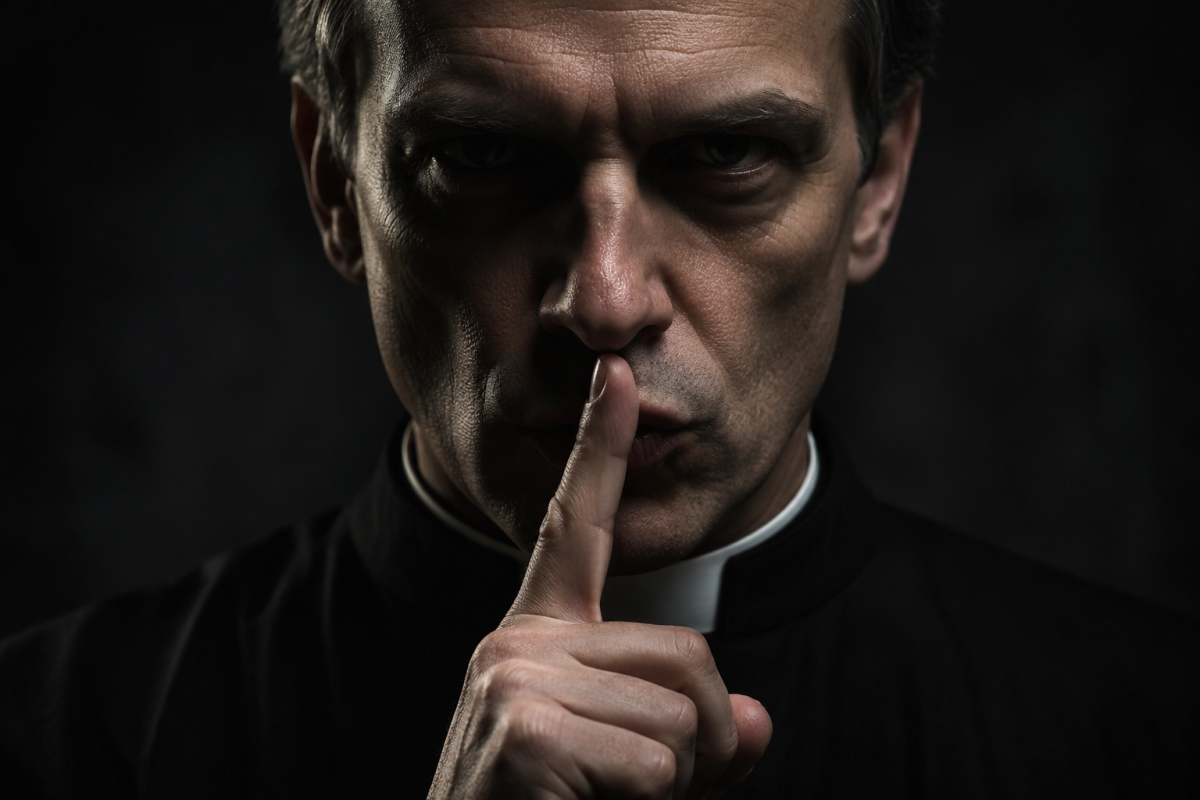
- No, the priest in the picture isn’t me. For starters, he’s AI-generated. He’s also considerably better-looking and lacks the perpetually harried expression I’ve spent years perfecting.
- No, my bishop doesn’t officially know I’m Stinkbomb. But let’s just say we’ve had a conversation that suggested otherwise. The gist? Keep parish ministry separate from Anglican Watch. Sensible advice, actually, and something I take seriously. Whether my bishop knows more than s/he lets on is another question.
- Yes, I’m always this outspoken. One of the church’s great failings is that everyone gets all churchy-nice in public while sharpening the knives in private. I don’t roll that way.
- Yes, I’m sincere. I like almost everyone. But if I dislike someone or their behavior, I won’t go out of my way to advertise it. Nor will I pretend otherwise.
- Yes, I’m openly gay. And yes, my parishioners know. Somehow, the roof hasn’t fallen in.
- Yes, I’m terminally single. I’d prefer otherwise, but I expect people to have standards. Unfortunately, that generally rules me out.
- Yes, I endorse our editorial position that married clergy should be monogamous. And I know far too many clergy in so-called “open relationships.” Sorry, but I believe there’s a special kind of love that comes from committing yourself to one person. Clergy who promise fidelity while living otherwise are cheating themselves, their spouses, and the vows they made. And when those arrangements are concealed or misrepresented, they’re living a lie.
- Yes, I occasionally escape town hoping for romance, relaxation, or preferably both. Usually, I come home with neither and a Visa bill that suggests otherwise.
- Yes, I’m a personal trainer and teach spin classes in my copious free time. And no, ladies, I’m not wearing Lycra bike shorts. I have enough problems without creating small ones.
- Yes, I’m actively involved in running Anglican Watch. As deputy editor, I help shape coverage, review stories, and make editorial decisions. Eric is the editor, and we work closely together. I write less frequently these days, but that doesn’t mean I’m sitting around eating bonbons. And if you’re trying to identify which of us wrote a particular article, good luck. Our writing styles have converged over the years. Like Clairol and your hairdresser, only we know for sure.
- Yes, some people say I’m a good investigator. I suspect that’s because I genuinely enjoy talking with people, I’m curious by nature, and I get around. And no, not that way. Although, given the state of my love life, I appreciate the vote of confidence.
- No, my parish is not an Anglican Watch bureau. Pastoral conversations remain pastoral conversations. Confidentiality isn’t negotiable, and my parishioners aren’t potential sources simply because they know me. I take those boundaries seriously, even when I don’t take myself particularly seriously.
- Yes, I know a great many of the people mentioned on this site. What that says about them remains an open question.
- No, I’m not identifying my family. They didn’t volunteer for this circus, and I’d like to keep it that way.
There. That should save everyone a few whispered conversations over coffee hour.
Of course, if Episcopalians devoted half as much energy to protecting children as they do to dissecting one another’s private lives, we might actually have a healthier church.
But apparently gossip is easier than accountability.
Just a thought.