We recently heard from yet another survivor of abuse at St. Albans School, Colin S., who shared with Anglican Watch his experiences with abuse and sexual misconduct at the school and his efforts to seek justice. Colin says he was never raped at St. Albans, but the misconduct he witnessed, inappropriate contact he experienced, and the school environment he describes left psychological scars lasting decades.
Colin is intelligent, articulate, friendly, and candid about his experience. He also describes decades of severe depression, anxiety, behavioral difficulties, and symptoms that may be consistent with post-traumatic stress disorder. He believes his attempts to escape that pain contributed to risky decisions in adulthood, during which he contracted HIV and eventually developed advanced AIDS.
At Colin’s request, Anglican Watch is identifying him by his first name and last initial only. Although he is willing to discuss his experience, he wishes to minimize the possibility of discrimination because of his HIV status. His candor does not diminish his right to privacy.
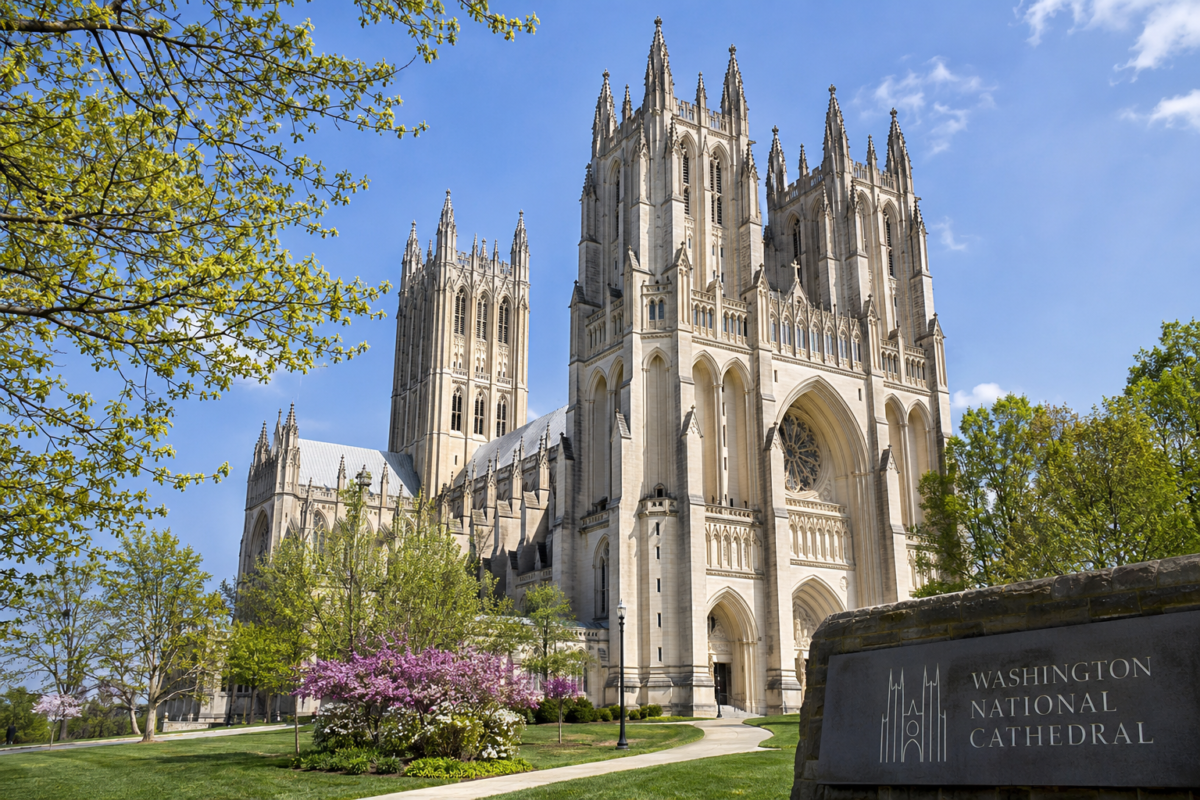
According to Colin, the Protestant Episcopal Cathedral Foundation, which oversees institutions on the Washington National Cathedral Close, offered him two years of free counseling. That is a start. But it is an inadequate response to suffering he says has lasted for decades.
A childhood overshadowed by misconduct
Colin also alleges that his French teacher struck him with a stick. Such conduct, if substantiated, raises serious questions about physical abuse and safeguarding at St. Albans School. The District of Columbia expressly prohibits corporal punishment in public schools; that regulation does not, by itself, establish a comparable blanket prohibition for private schools. Striking a student may nonetheless implicate generally applicable assault law, depending on the circumstances.
Colin entered St. Albans at about age 10, in C Form (fourth grade), and attended from 1980 to 1986. He expected to stay through graduation. Instead, he remembers a school where children had reason to fear certain adults and where distress too often became another reason to punish a student.
Colin says teacher Christopher Sinderson reached inside his shirt and touched him inappropriately. He also alleges that Sinderson pushed him onto a desk and held him down so forcefully that he struggled to breathe. That was a frightening experience for a child in the custody of a teacher.
The 2019 published summary of an independent investigation documents allegations of inappropriate touching by Sinderson, corroborated by other former students. It also reports that a teacher complained about Sinderson’s conduct, but investigators could not establish whether administrators imposed meaningful discipline. After leaving St. Albans in 1986, Sinderson received a positive employment reference, according to the summary. He pleaded guilty in Maryland in 2001 to sexually abusing a minor in connection with conduct at another school, receiving a five-year sentence with all but six months suspended.
Colin also alleges that teacher Adrian Vercouterin would stand too close to him while visibly aroused. He also recounts a trip with Vercouterin and several boys to Chincoteague and Assateague. Colin alleges the teacher left him alone while sexually abusing other students. He remembers warnings from older boys about the teacher, as well as adults crossing boundaries with students in locker rooms and showers. Those specific claims are Colin’s account; we have not independently corroborated every incident or established that all references to an unnamed teacher in the institutional summary concern Vercouterin.
A toxic school environment—and trauma for witnesses
For Colin, the harm was not limited to what happened directly to him. He describes an entire environment as toxic, intimidating, and traumatic. One teacher, he recalls, openly kept pornographic magazines in a classroom desk. Other faculty members engaged in conduct boys discussed among themselves as warnings. According to Colin, the school did little or nothing to confront much of what students were seeing.
The published investigation independently documents former St. Albans teachers displaying pornography to students, crossing sexual boundaries, and showering with boys. It also examines the case of Ron Wilmore, a former St. Albans teacher accused of raping a student at the neighboring National Cathedral School. After a 1983 report that Wilmore kissed and fondled the student, administrators placed him on probation. The student later disclosed that he had raped her; Wilmore denied that allegation and was forced to resign in 1984. Investigators concluded the school’s original response had been too lenient even on the facts known at the time.
Children need not be the direct targets of sexual assault to be harmed by it. Witnessing disturbing conduct, hearing credible warnings about adults, seeing classmates mistreated, and doubting that responsible adults will intervene can undermine a child’s sense of safety. Such exposure can contribute to fear, anxiety, hypervigilance, and other trauma-related responses. Colin believes the atmosphere at St. Albans did precisely that to him.
Nor should every failure be reduced to sexual misconduct. Colin describes emotional abuse, rejection, humiliation, and an institutional culture in which students who struggled could feel unwelcome. Children need to feel safe, valued, respected, and welcomed, especially at a school that invokes Christian ethics and pastoral responsibility. Those are not optional extras.
When trauma became a disciplinary problem
As Colin’s depression, anxiety, alcohol use, and disciplinary difficulties mounted, he recalls being expelled from classrooms and made to sit in hallways. He says he sometimes was prohibited from receiving communion in chapel, without being offered a blessing. A shop teacher, he recalls, publicly mocked him.
After becoming dangerously intoxicated at a nearby friend’s house, Colin was taken by ambulance to an emergency department. He says the school then required him to speak to the entire student body about the episode—another deeply humiliating experience.
Colin says no one at St. Albans made a meaningful effort to understand why he was struggling. School officials, in his telling, focused on his conduct rather than asking whether he had experienced or witnessed abuse, or whether the school’s environment was contributing to his deteriorating emotional health. We cannot know how different his life might have been had someone intervened. But a school that demands accountability from children owes them at least the effort to understand their distress.
By eighth grade, Colin desperately wanted to leave. His parents initially resisted, but he eventually transferred to a Quaker school, leaving friends and familiar surroundings behind. Colin had been a first-string football player at St. Albans. His new school did not offer football, so the transfer also cost him a sport in which he had excelled.
Consequences that lasted for decades
Colin describes continuing depression and recurring dreams about his school years. He attended the University of Vermont, became a father, pursued freelance work, and moved among communities, but struggled with relationships and self-worth. He associates some of his later alcohol use and sexual risk-taking with efforts to distance himself from earlier psychological pain.
He contracted HIV and eventually became critically ill with advanced AIDS. By his account, his CD4 T-cell count reached 19, he was hospitalized for roughly two weeks, and he had difficulty tolerating medication. He remembers looking into his son’s eyes and fearing he would die. It would be medically unwarranted to attribute HIV transmission solely to school experiences; Colin’s account is that those experiences profoundly shaped the difficulties he faced afterward.
Colin also says that, when he identified as an atheist, he was consistently denied communion—and even a blessing. He describes the refusal to offer a blessing as another painful example of exclusion by the church.
Some relief came around 2016, when agricultural work, including raising sheep and goats, gave him renewed purpose. He also spent years caring for his aging parents. During those years of farming and caregiving, Colin developed a renewed sense of faith—one rooted in his experience of life, service, and responsibility rather than organized religion. These chapters reflect resilience and a gradual recovery of meaning, but they do not erase the harm he reports.
For Colin, one of the greatest gaps in the church’s response remains its refusal, as he sees it, to accept accountability for its own behavior. He has found a way to reconnect with faith without returning to an institution he believes has failed to acknowledge fully the harm done to children entrusted to its care. Counseling may help survivors manage the consequences of abuse; it is no substitute for the institution’s willingness to take responsibility.
An investigation without full transparency
In 2018 and 2019, the Cathedral Close institutions engaged Debevoise & Plimpton to investigate historical adult-student sexual misconduct. The investigators reviewed more than 40,000 documents and interviewed over 200 people. The institutions’ June 27, 2019 summary reports that misconduct by 16 former employees or other associated adults was corroborated, including nine former St. Albans employees.
But the full underlying investigatory report has never been publicly released. What the public received was a 20-page summary prepared by institutional leaders and reviewed by the investigators. Its selective identification of individuals and limited discussion of past leadership decisions leave important questions unanswered. Anglican Watch calls for the underlying findings to be disclosed with appropriate protection for survivors and witnesses.
We will preserve the documents the church has not kept accessible
Relevant historical documents once available on the Episcopal Diocese of Washington website are no longer publicly accessible there. We requested comment from the diocese and received no response. We cannot establish why access ended, but transparency and disclosure would have been the better approach.
Since the Episcopal Church apparently does not feel the need to maintain public access to these records, Anglican Watch will. We are hosting the relevant documents on our own website as part of a permanent historical archive. These records should remain available to survivors, alumni, reporters, and researchers, not disappear into an institutional memory hole.
Two years of counseling is not enough
The Cathedral Foundation’s reported two-year counseling offer is welcome, but why should assistance for decades of suffering stop at two years? Colin describes profound and persistent emotional consequences, not a brief period of unhappiness. Although St. Albans cannot automatically be held responsible for every later adversity, harm to children cannot reasonably be measured solely by whether they were raped or physically assaulted.
At a minimum, the foundation should offer counseling for as long as clinically appropriate, consider other forms of meaningful restitution, and ask Colin directly what repair would look like. It should also confront the larger failure: an Episcopal school that spoke about ethics and character while, by Colin’s account, failing to offer a struggling child safety, compassion, and understanding.
Safeguarding means more than preventing sexual assault. It requires an environment in which children feel safe, valued, respected, and welcomed—and where adults respond when a child is in distress. Two years of counseling is a start. It is not a satisfactory answer to decades of suffering. We call on St. Albans, the Cathedral Foundation, and the Episcopal Church to do better.
Colin’s privacy and willingness to speak
At Colin’s request, we are using only his first name and last initial to reduce the possibility of discrimination related to his HIV status. He is nonetheless willing to speak with reporters, researchers, and others interested in his experiences. Anyone wishing to contact him may reach out to Anglican Watch; we will facilitate an introduction with his consent.
Related coverage
- Spotlight on abuse: Episcopal lay teacher Ron Wilmore — Earlier reporting on misconduct involving St. Albans and National Cathedral School.
- Spotlight on abuse: Episcopal lay teacher Larry Smith — Historical allegations involving another St. Albans teacher.
- Can we talk? My experience with abuse, PTSD, depression and the holidays — Reflections on long-term consequences of non-sexual abuse.
Sources
- St. Albans School correspondence, August 2018 (PDF) — An initial letter addressing allegations involving a former teacher and the school’s promised response.
- Letter to the St. Albans community, February 4, 2019 (PDF) — School leadership announces the independent investigation.
- Letter to the Cathedral Close community (PDF) — Joint institutional announcement expanding the inquiry.
- Summary of the Findings of the Independent Investigation, June 27, 2019 (PDF) — The 20-page public findings summary; not the full investigative report.
- Interview with Colin S. — Firsthand account provided to Anglican Watch of his school experiences and subsequent life.