

Source: Anglican Ink, dated December 10, 2025
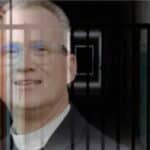
The Episcopal Church’s Court of Review heard oral arguments today in the case of the Rev. Canon Edward Monk SSC of the Diocese of Dallas. The 10 December 2025 proceedings were held online and livestreamed.
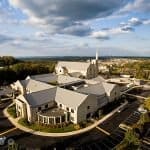
On 11 Nov 2024 Canon Monk was charged with six counts of fraud and mismanagement under Title IV of the Episcopal Church’s disciplinary canons. The complaint stated the St John’s Episcopal Church of Corsicana, Texas, rector failed to “safeguard the property and funds of the Church and Community”; committed a “criminal act that reflects adversely on the Member of the Clergy’s honesty, trustworthiness, or fitness as a minister of the church”; and engaged in “conduct involving dishonesty, fraud, deceit, or misrepresentation.”
Canon Monk was placed on administrative leave by the diocese on 5 Aug 2024, and resigned as chairman of the board of trustees of Nashotah House shortly thereafter. He subsequently stepped down as vice-chairman of the Navarro County board of appraisers.
In May 2025 a diocesan hearing panel held Monk had violated church canons and should be removed from the priesthood. The diocesan hearing panel found Monk guilty of “conduct unbecoming a member of the clergy” on all six counts of fraud and mismanagement.
A Navarro County Texas grand jury also has indicted Canon Monk on three counts of theft. On 19 Dec 2024, a Navarro County Texas grand jury handed down complaints of Theft over $300K, Fraud in the 3rd Degree, and Credit Card abuse, the NavCo Chronicle reported.
In his appeal Canon Monk alleged the diocesan proceedings had been a “sham”.
There were: “Countless violations of the Canons—by both the Church Attorney and the Hearing Panel— restricted Respondent’s discovery in the instant matter and put his Constitutional rights in the related criminal proceeding in grave jeopardy.”
“Specifically, the Hearing Panel struck a number of interrogatories properly served by Respondent, allowed him to serve interrogatories only on whoever happened to be the designated Complainant at the time, permitted the Church Attorney to switch designated Complainants several times in one week, and deprived him of the right to depose additional witnesses even after it was clear that the final Complainant was improperly designated as such due to her sworn lack of relevant information. At a minimum, these actions violated Canons IV.2, IV.3.7, IV.6.7 as amended by General Convention Resolution 2024-A142, IV.7.4, IV.11.1, IV.13.7, IV.19.10(a), IV.19.12, and General Convention Resolution 2000-D015. The Hearing Panel also erroneously interpreted Canon IV.13.5(d) to severely limit Respondent’s discovery rights.”
“This long train of abuses culminated in the sham hearing of May 27 from which the Order issued. The Hearing Panel insisted on conducting the hearing in a manner that both deprived Respondent of his right to effective counsel at the hearing and placed his canonical and Constitutional rights in the criminal proceeding in grave jeopardy. Respondent’s counsel of choice, Barry Black, was seriously ill at the time and made several requests for a short adjournment, which the Hearing Panel refused. Worse, the Hearing Panel permitted Church Attorney to confront Respondent with witnesses from the District Attorney’s office knowing full well that Respondent would not have his criminal defense attorney present at the hearing.”
“Despite these obstacles, Respondent appeared at the hearing, and Mr. Black participated remotely as best as he could given his physical condition. When it became clear that the Hearing Panel was going to roll over Respondent’s rights and reach its predetermined outcome, Respondent was forced to leave the hearing in order to preserve his rights. The Hearing Panel issued its Order deposing Respondent without his exercise of the right to effective counsel. This deprivation meant that Church Attorney could not possibly have met the standard of proof required by Canon IV.19.16 …”
“In short, the entire decision-making process, the sham hearing, and the related canonical violations substantially prejudiced Respondent by impeding his abilities to both fully defend himself against the allegations in the Complaint and to safeguard his Constitutional rights in the related criminal proceeding …” the pleading stated.
A decision is expected in the new year.



I’m not sure why Anglican Ink repeatedly refers to Ed Monk as “Canon.”
Just to clarify, this is a title he held in the Diocese of Quincy prior to his move to the Diocese of Dallas in the early 2000s. He was never made a Canon in the Diocese of Dallas.
Yes, and at a time when I’m confident that Monk has been told he cannot hold himself out as a priest,
In the Episcopal Church, the title “canon” is not diocese-dependent. While the specific offices, functions, and designations of canons are determined by individual dioceses or cathedral chapters, the title itself is recognized church-wide and does not vary by diocese.
Thus, his move from Quincy to Dallas would not deprive him of the canon title.
Although we are prepared to bet that Monk is not permitted under terms of the existing restrictions on ministry to hold himself forth as Episcopal clergy, canon or otherwise.
How long does it take the Court of Review to “review” a simple case?
The Court of Review process can be painfully slow, taking a year or more.
That said, if Monk had even rudimentary integrity, he’d stop with the games and own up to his misconduct. The fact he shows zero remorse and takes no responsibility warrants imposition of the maximum criminal penalty when the matter goes to trial.