
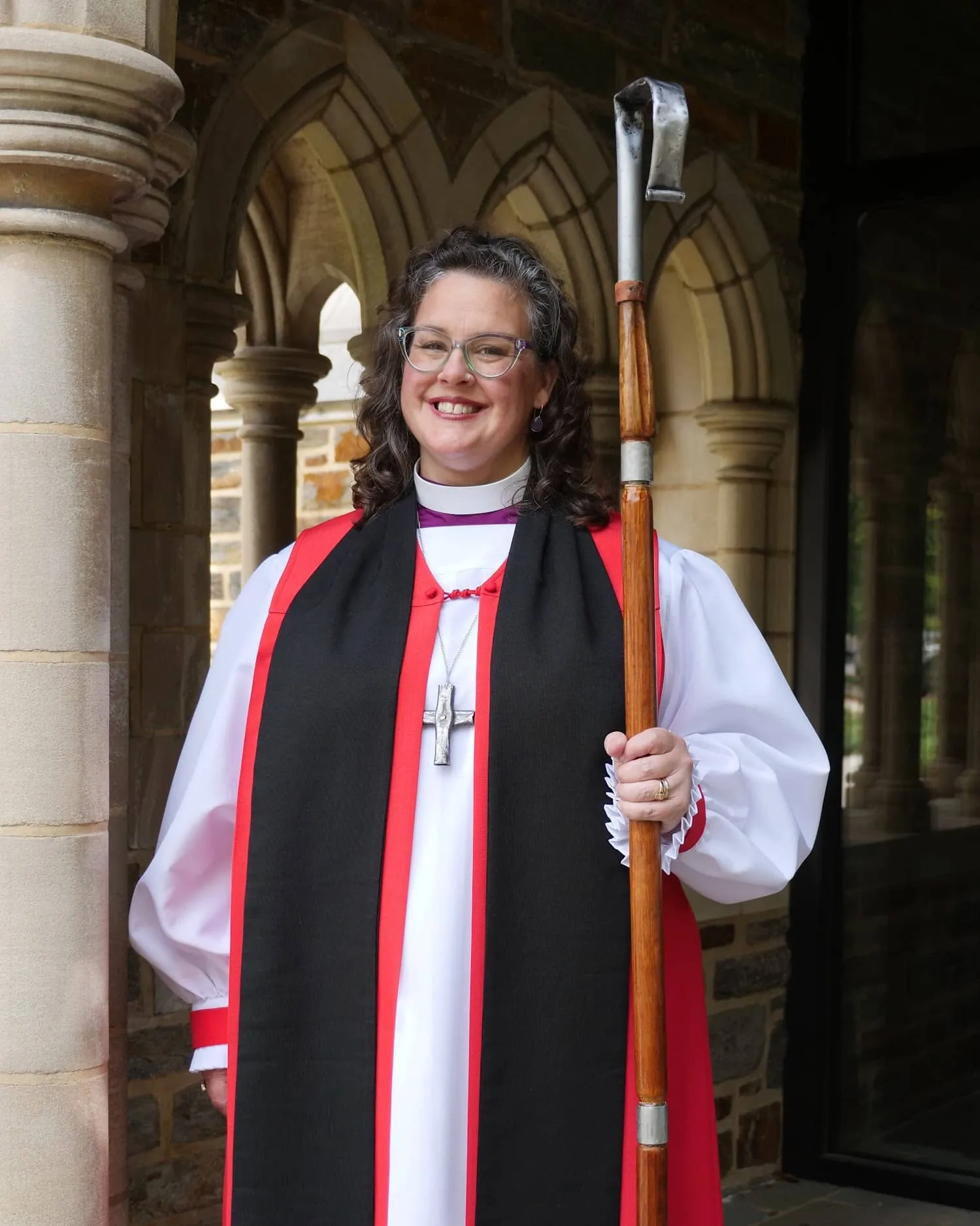
As of the date of this post, the Episcopal Diocese of Maryland is 9 days away from its annual diocesan convention. Yet, even at this late date, all indices suggest that the Diocese is sliding towards major governance issues, with multiple signs indicating that the problem stems from Bishop Carrie Schofield-Broadbent’s desire to eliminate oversight of her actions as bishop — and to increase her already generous salary.
Or, to put it in succinct terms: Folks, you’re lurching towards trouble. We’re sounding the alarm.
Why so many CFOs?
Before we proceed, over the past year, we’ve seen a warning sign of serious problems, namely the Diocese churning through three different CFOs.
To be clear, that right there should have members of the standing committee up in arms. Indeed, absent an exceptional fact pattern, this should be enough to demand answers and, if the answers aren’t damned good, a forensic audit.
Moreover, diocesan chancellors must recognize that the Diocese is their client, not the bishop. Thus, there is a legal obligation to protect their client when, as here, all signs point to serious ethics and governance issues.
Where’s the draft budget?
Then, we come to a pressing issue: the lack of a draft diocesan budget.
In past years, the Diocese has held open forums to discuss the draft budget, answer questions, and identify potential issues prior to presenting a budget proposal to the diocesan council in December.
To be clear, the Diocesan Convention should have the opportunity to be fully engaged in the budget process.
Yet, with just days to go before the convention, to our knowledge, no draft budget has been publicly released, no forum has taken place, and no supporting materials are available. (The Diocese did not immediately respond to our request for a copy of the draft budget.)
Other transparency issues
Nor is the other information on the Diocesan website reassuring. Consider:
- The last audited financial statements for the Diocese date back to 2022 and were posted two years later. To be clear, it should take no more than 4-6 months to prepare the previous year’s financials, which suggests to us that there were issues.
- The last budget forum took place in September 2024.
- The 2024 budget forum presentation, hardly a model of transparency, reveals that a shocking 45 percent of the diocesan budget is allocated to the bishop’s office, totaling almost $2.5 million.
- The last annual parochial report data is from September 2024.
- Nowhere do we see audit reports.
In short, all signs point to a perfect storm in the making.
Bishop’s salary
We have also received disturbing reports about Bishop Schofield-Broadbent’s push to pad her salary. Although we have not independently verified this information, sources close to the matter indicate that she earns $250,000 annually and is seeking further increases.
Keep this situation in mind, as it relates to concerns surrounding several proposed amendments to the diocesan canons, which appear to be coming directly from the bishop. More on that in a moment.
Allegations of bullying behavior
Multiple people we interviewed reported that Schofield-Broadbent appears to shield sycophants, while punishing those she perceives as threats.
We also note that the bishop discusses a possible merger with the Diocese of Easton as if it were a done deal, with many suggesting that she views this outcome as a stepping stone to additional salary increases.
To be clear, there’s far too much of this behavior in the episcopacy. But in addition to questions about the bishop’s salary, it lends credence to the concerns about the proposed changes to diocesan canons, which we previously mentioned.
Proposed canonical changes
In reviewing proposed changes to the diocesan canons for consideration at the upcoming convention, they appear to focus on reducing oversight by the diocesan Compensation and Benefits (C&B) Committee.
Big surprise, that.
Among the proposals, all of which are supported by laughably disingenuous explanations:
- Allowing existing C&B members to serve successive terms. Not only does this suggest that the bishop has placed one or more allies on the committee, but even without that, it is still bad practice. Term limits bring vitality to governance, fresh perspectives, and increased accountability.
- Eliminating the C&B committee’s current responsibility to “provide recommendations to the Diocesan Council as to projected Diocesan salary and benefit budgets.” The explanation is the facially disingenuous claim, “Setting Diocesan salary budgets is the prerogative of the Bishop in consultation with the Diocesan Council. It has never been a responsibility of the Compensation and Benefits Committee.” To clarify, the committee’s current role is to provide recommendations to the Diocesan Council. It does not set salary budgets.”
- Restricting the C&B committee’s role in providing recommendations to the bishop regarding personnel policies and practices to those situations in which s/he asks for these recommendations. To be clear: “Trust me, I’m the bishop,” doesn’t cut it.
- Eliminating the C&B committee’s role in developing periodic reviews of competitive salary and benefit practices applicable to the Diocesan clergy and lay staff. Again, an inadequate explanation: “Since reviewing ‘competitive practices’ would require reviewing the practices of dioceses other than the Diocese of Maryland, the committee does not believe it has standing to undertake such reviews. To be clear, this information is readily available from compensation consulting professionals and the Church Pension Group. Claims involving standing are nonsensical.
- Eliminating the role of the C&B committee in recommending compensation levels for diocesan staff. The explanation? “Twice in the last 20 years, the committee has been asked to conduct such reviews of diocesan staff salaries. The reviews were time-consuming, difficult, and of dubious long-term usefulness.” To be clear, nothing in the existing language requires formal reviews. So, why eliminate the bishop’s ability to access the committee’s expertise?
- Removing the committee’s role in establishing living wage standards for congregational lay staff. The laughable reasoning? “Since there is such variability in the actual duties and percentage of full time of (sic) people with these titles, it is not possible to set a minimum annual compensation (sic) any of them.” To be clear, the same argument applies to clergy, so why target lay employees? And why on this green earth would the Diocese not want to pay a living wage?
- Eliminate the requirement that parishes create compensation committees. The excuse? The C&B committee cannot compel parishes to take any action. But as it stands, this provision is a canonical requirement, not a committee policy.
- Eliminate the requirement that, as part of their annual parochial report submissions, parishes certify that their local C&B committees have undertaken an annual compensation review. The excuse is that only the bishop has the prerogative to issue such a requirement. Again, the current policy is a church canon, not a mandate from the diocesan Committee on Budget and Finance.

A full copy of the proposed canonical amendments follows.
We are deeply alarmed
These proposals are deeply alarming. Indeed, one needs only look at the hot mess that Bishop Jon Bruno got himself into with his Corp Sole and his Machiavellian behavior to see that there’s a high likelihood of disaster if these proposals are adopted.
Indeed, there’s already far too little transparency in most dioceses, with blended budgets being a huge problem for most parishes and dioceses. Young people, in particular, believe that they should be able to see line-item budget details, particularly for top officials in dioceses and churches. And it’s not an outrageous proposition: Publicly traded companies must, as a matter of law, publicly report compensation of highly compensated individuals.
So why should this be an issue for any bishop or priest?
Additionally, the ludicrously disingenuous and duplicitous explanations for the proposed canonical amendments should be enough to sound alarms at every level of the Diocese.
To be clear: Any proposed canonical amendment not accompanied by a good-faith, truthful explanation is facially suspect.
Call to action
We urge delegates to the Diocesan Convention to vote no to these proposed amendments. Additionally, delegates can and should insist that the Diocese:
- Immediately publish the proposed 2026 budget.
- Hold an open forum on the budget prior to its consideration at the diocesan council.
- Immediately release audited financial statements.
Bishop Carrie Schofield-Broadbent also can and must publicly explain the sudden exodus of multiple diocesan CFOs. There’s no room in the church for anything other than transparency.
If these things do not happen, it is appropriate to ask the bishop to resign and to file Title IV clergy disciplinary charges against her.