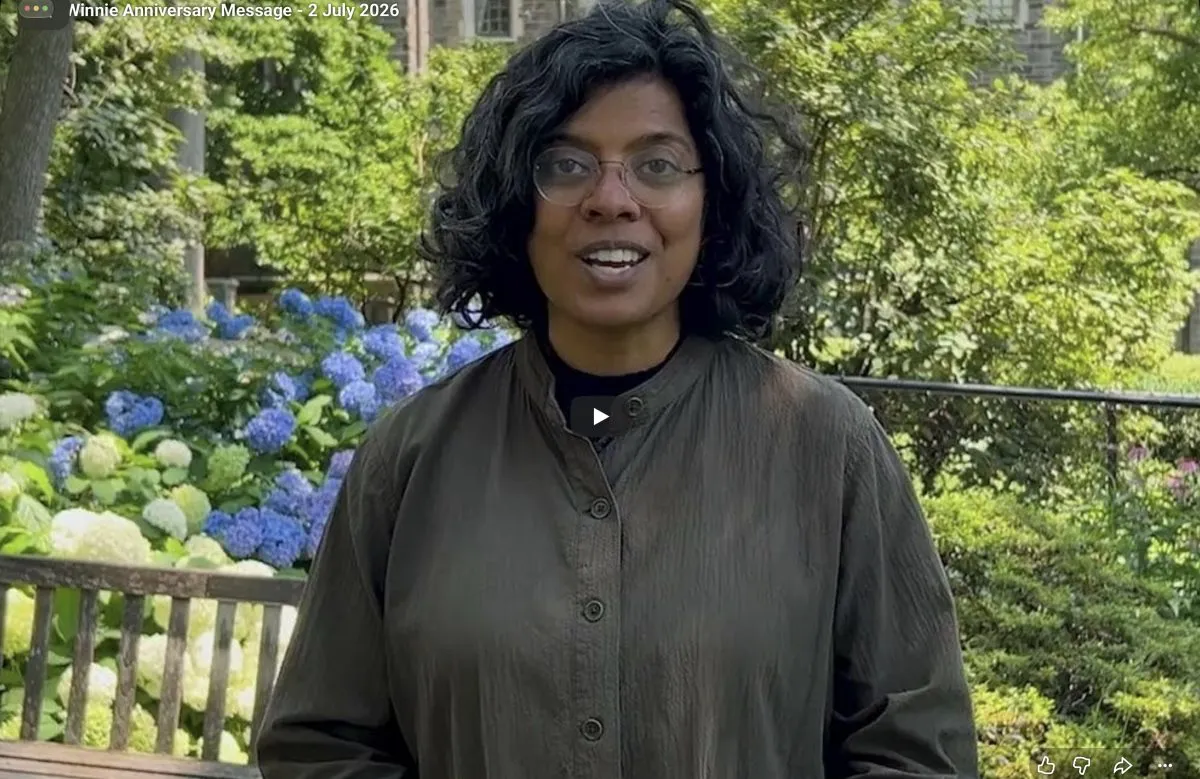

Every once in a while, we publish a story that takes on a life of its own. And so it is with our coverage of the looming financial problems facing the Cathedral of St. John the Divine and Dean Winnie Varghese’s treatment of church employees.
To be clear: Sometimes stories of this sort go viral and get national attention. Other times, these stories get relatively little public attention, but our inbox blows up, often with people afraid of retaliation.
The current situation falls into the latter category. Indeed, our anonymous tip line is getting an extraordinarily large volume of comments — even as the Cathedral declined to answer rudimentary questions we asked about its current financial posture.
These situations are telling
Of course, when people are afraid to comment, that often gets to the heart of the matter. Specifically, any church where people are afraid to comment or share their perspective isn’t healthy.
Relatedly, churches with nothing to hide are typically eager to respond to media inquiries. After all, if the news is good, why would you want to hide it?
In the case of St. John the Divine, all of the information we requested should, by right, be in the public domain.
Indeed, secrecy kills trust and donor engagement.
So, what did we request?
In this instance, it’s not like we were asking for the launch codes to the US nuclear arsenal. What we asked for was:
- Can you provide current interim financial reports?
- How much does the Cathedral have in its endowment?
- How much cash does the Cathedral have on hand?
- Who authorized the cost overruns on the apartment renovations on the Close?
The Cathedral declined to answer.
Warning signals abound
Thus, the Cathedral’s lack of transparency, alleged threats to employees, the Diocese of New York’s feckless governance under Matt Heyd, and cost overruns on staff apartment renovations are warning signs we cannot ignore.
We also want to be clear: We do not doubt that staff apartments needed renovation. In fact, if they’re like most clergy housing we’ve seen, the time for renovations was 50 years ago. Nor do we discount the possibility of asbestos and other unforeseen issues, which are endemic when renovating older buildings.
That said, we’ve spotted numerous high-end, custom items in these projects.
And to be clear: These are not the papal apartments. Instead, we’re talking about housing for relatively low-level cathedral employees. (No, we’re not going to get all caught up in crazy, Victorian-era titles about The Venerable or any of this other silliness. We’re talking employees of a nonprofit that is hemorrhaging vast sums of cash, in a denomination that is sharply declining. And alleged behavior that looks nothing like Jesus.)
Our take
We’ve seen this situation far too often in the Episcopal Church, where a leader like Varghese comes in, all smiles, sunshine, and fine words. But behind the scenes, the underlying behavior seems toxic.
In those cases, a closer look usually reveals that the so-called leader is a narcissist, able to craft an image of kindness and compassion, even though the reality is far different.
Thus, we believe that Varghese needs to go, and sooner rather than later.
That said, our conclusions are nothing personal. Instead, this is about recognizing the situation for what it is and the likelihood of long-term harm to the Cathedral and the church as a whole.
We also want to be clear: We want the Cathedral to succeed. But massive cost overruns on housing for Cathedral staff, a lack of transparency and accountability, and allegations of bullying of Cathedral employees are not the way to go.
We also need to call a spade a spade. Much of the current rising economic tide is due to the so-called AI bubble. Pull that out of the economic mix, and we’re in for several years of financial pain. Moreover, nothing we have seen suggests that current AI business models are sustainable over time.
In other words, an economic downturn would be catastrophic for the Cathedral. Thus, the Cathedral must balance its cost structure without relying on revenue forecasts pulled out of, um, the air.
That is all the more the case when, as here, the Cathedral is drawing down both its endowment and its cash reserves. Our analysis suggests that this drawdown has been cushioned by rising markets; thus, a downturn would simultaneously erode both donations and the value of the Cathedral’s investments, leaving no alternatives except draconian budget cuts.
Moreover, these behaviors are not new. Historic documents we reviewed reveal structural deficits extending back into the 1970s and likely far beyond that. But for much of the Episcopal Church, the days when cathedrals were assured a steady influx of donations and bequests to buffer reckless spending have largely drawn to a close.
Action items
We urge Cathedral and Diocesan leadership to act now and demand a balanced budget, based on realistic budget forecasts. We also believe Cathedral finances warrant much closer scrutiny, as some of the allegations we have received suggest possible illegal conduct.
Nor is it appropriate to continue fluffing the credit union’s finances with Cathedral funds. While all credit unions require some outside funding during start-up, we see no meaningful business plan to get the credit union to break even. And taxpayers should not be on the hook via the federal insurance that applies to the credit union — even as the credit union contemplates hiring two additional well-compensated full-time positions in the coming months.
Looking forward
As things stand, the situation at the Cathedral increasingly looks like the Episcopal version of the PTL club. Slightly better clothing and somewhat more genteel/politically correct. Nonetheless, headed for a meltdown and a whole lot of embarrassment.
Nor should folks look to Trinity Wall Street for a bailout. The latter has been more than fair to the Cathedral and was willing to invest start-up funds for the credit union. But Varghese and her colleagues cannot expect an endless blank check.
So, we’re going to keep wading through the comments and tips coming in, even as we grow increasingly concerned about a possible debacle at the Cathedral. We’ll also continue to cover this story.
We also want to be 100 percent candid: We are examining whether to refer several specific concerns to the appropriate regulatory officials and law enforcement. That’s because, while state and federal law offer broad exemptions for churches regarding financial disclosure, some of the allegations we have received may cross into unethical, and even illegal, territory. That is especially true when, as here, the Cathedral solicits financial support from people and organizations well outside its actual membership. And again — the credit union, in particular, remains afloat solely due to cash donations from the Cathedral. If the latter stopped, the credit union would be instantly insolvent.
In the meantime, we want to reiterate two things:
- Trustees must not take Varghese’s promises of a balanced budget at face value. Nothing suggests a credible plan to get there, and internal forecasting shows a worsening financial picture, even without a potential financial downturn, which seems increasingly likely.
- The time to act is now.
Stay tuned.