
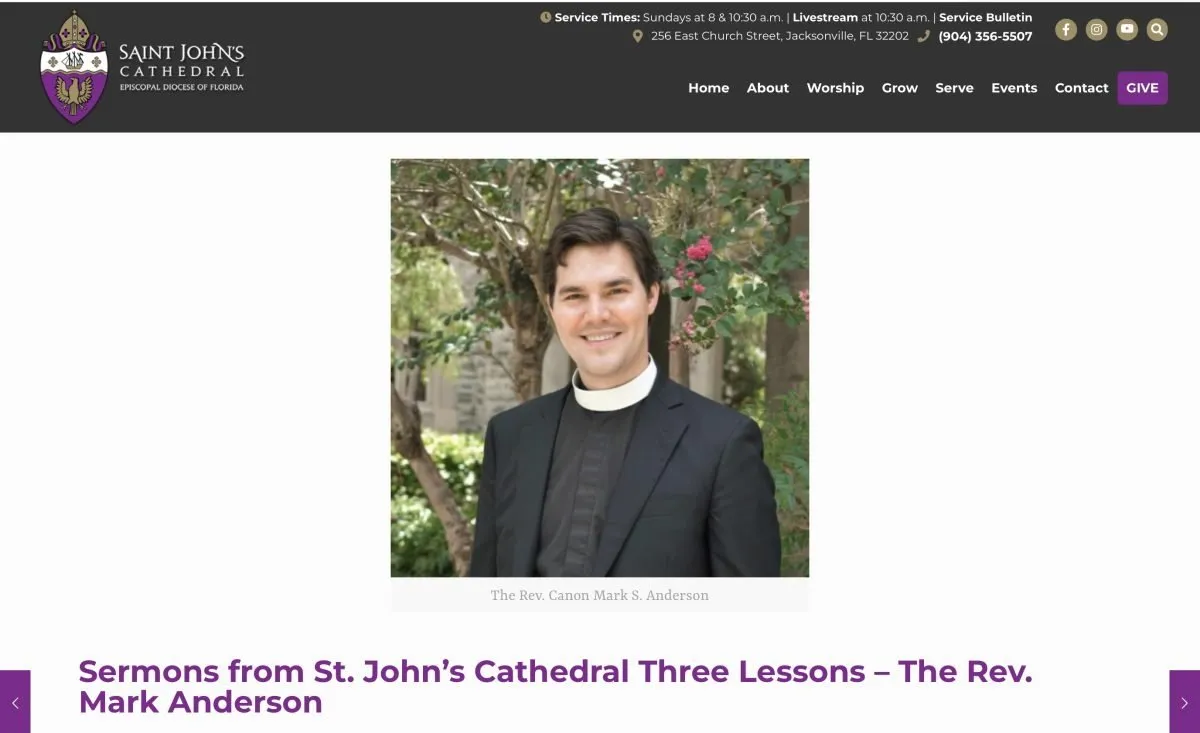
Episcopal priest Mark Anderson tries to convince the court that his inconsistent, disingenuous statements should be hidden from the public
Earlier today, Anglican Watch learned that Episcopal priest Mark Anderson has filed motions that, if granted, would keep his sneaky behavior out of the public eye. In other words, it’s sounding suspiciously like he’s trying to interfere with the Title IV clergy disciplinary case we’ve filed against him.
To be clear, Anderson is, for purposes of First Amendment jurisprudence, a limited-purpose public figure.
What does that mean?
It means simply that the public has a right to know about issues that may reflect on his integrity, ethics, and qualifications needed to be a successful priest. Thus, it is a safe bet that the public has the right to know that, on the one hand, he told his mortgage lender that Daddy’s money was a gift — even as he seemingly now tries to perpetrate a fraud on the courts by claiming that these same funds were a loan. This, even though he has yet to produce a promissory note signed by his wife confirming her agreement to the loan. It also means that there is a very high bar to any successful claim of defamation on his part.
Speaking of, his noisy claims in his pleadings that we are defaming him are laughable, as we’ve invited him directly to tell us if anything we’ve published is inaccurate, or to provide us with a copy of that any loan agreement involving his wife.
Shouldn’t be a biggie, right? We’re pretty sure that Daddy doesn’t give out seven-figure loans, even to Nepo Boy, without some sort of written agreement — but then, given junior’s purported $12 million-plus trust fund, maybe this is just money floating around the margins.
In fact, even given the dismal state of attorney ethics in Florida, it sounds like his attorney is skating the very edge. As in, per Rule 3.3, pleadings must be grounded in law and fact. Moreover, Anderson’s attorney has a duty to avoid proffering false testimony and to take steps to remediate if such information enters the record.
With those requirements in mind, we’re still looking for an explanation: Why did Anderson claim the money from Daddy was a gift, then later say it was a loan? Which is it? And did he encourage Daddy to proffer false statements under oath, which could be considered suborning perjury? How can any reasonable attorney at this point not have some tough questions for her client?
Of course, we then skate into the whole issue of Anderson’s claims for a clergy housing allowance that amounts to almost his entire salary, for a home he doesn’t live in. Sure sounds like tax fraud to us. But we leave those judgment calls to the relevant taxing authorities.
We’d also point out several additional factors:
- Anything we already possess is not subject to the protective order. And we’ve been busy, indeed!
- Being outside the jurisdiction of the Florida domestic relations court, there isn’t a damned thing Anderson can do to stop publication.
- There’s a ton of information out there from other sources that, irrespective of the success or failure of his motions, is available to us. And the more Anderson tries to manipulate and litigate his way out of this, the more attention he’s going to get from us.
- If Anderson thinks his silly drivel about alleged defamation will intimidate us, he’s in for a rude awakening.
Meanwhile, it’s pretty rich that Anderson is pleading poverty, even as he ignores his trust fund, his father’s self-proclaimed “regular gifting program replete with gifts of $1 million a pop, his previous almost $5 million home, the hundreds of thousands he has spent on litigation, and more.
Finally, it looks like Nepo Boy really doesn’t get it: The more he flails around, acting like an ass, the more attention he’s going to get from us. And we’re happy to sit in on motions court and otherwise get public information to illustrate just how bad his behavior is and what a loser he is.
In other words, whether he wins or loses in motions court, he is not going to be successful overall in this matter. Church members have a right to know that clergy operate with the highest standards of integrity, and there is nothing about Anderson’s conduct in this matter that passes the sniff test.