
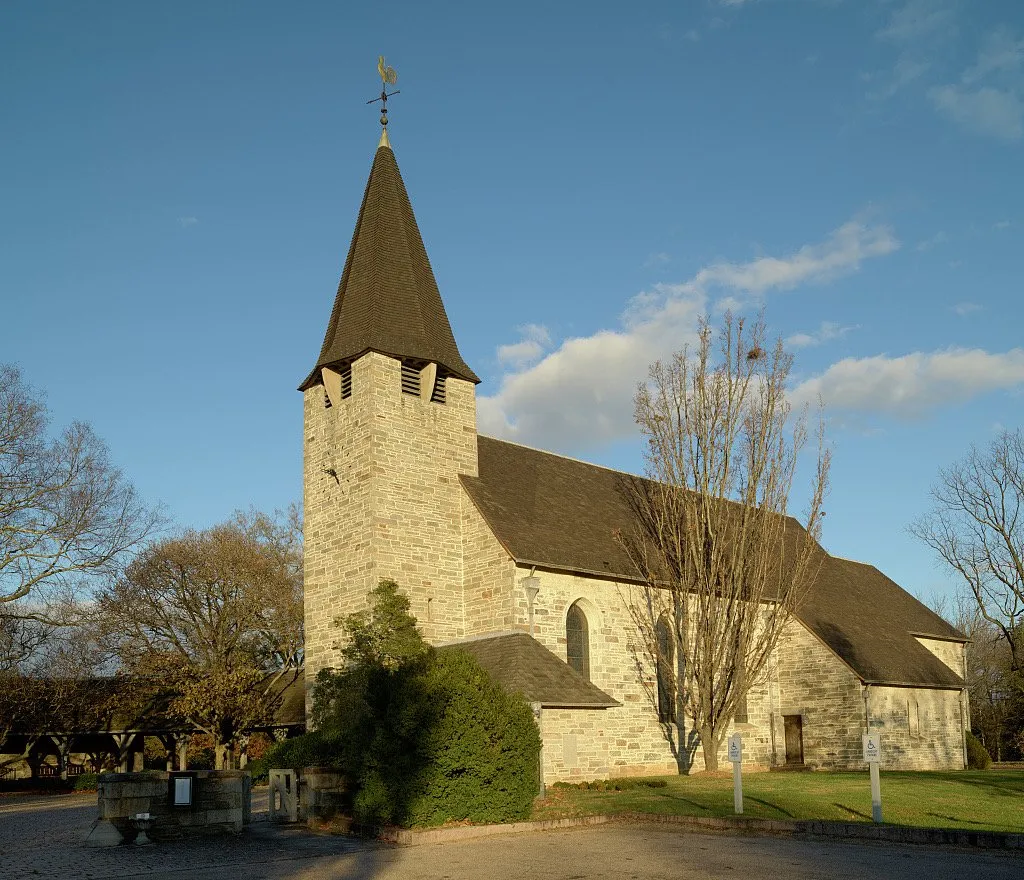
Anglican Watch inquiry reveals multiple violations of Title IV confidentiality by Jonathan “Johnny Boy” Adams. Yet the Diocese of Virginia is doing nothing about these disciplinary violations. Why?
As we continue to investigate allegations of grooming by Episcopal priest Jonathan “Johnny Boy” Adams, we have learned of multiple instances in which Adams violated canonically mandated confidentiality during the course of the Title IV grooming complaint filed against him. Moreover, the Diocese of Virginia has not taken any meaningful action against Adams over these violations.
So, let’s start by parsing Title IV’s requirements.
Canon IV.6.10 provides:
All communications and deliberations during the intake and referral stages shall be confidential except as the Bishop Diocesan deems to be pastorally appropriate or as required by law.
Canon IV.19.26 builds upon the previous section’s provisions by clarifying who must maintain confidentiality:
Wherever in this Title it is provided that any communication, deliberation, investigation or proceeding shall be confidential, no person having knowledge or possession of confidential information derived from any such communication, deliberation, investigation or proceeding shall disclose the same except as provided in this Title, in any Accord or Order, or as required by any applicable law.
How these provisions apply to Johnny Boy
Title IV provides that the Bishop Diocesan and the respondent in a Title IV case can, at any time, agree to terms and conditions of discipline. If an agreement is, in fact, reached early in the process, this outcome preempts the Reference Panel from referring the matter to a Title IV Conference Panel or Hearing Panel.
In Johnny Boy’s case, the agreement that he and Bishop Mark Stevenson reached happened soon after the Reference Panel referred the matter out for investigation, including to local law enforcement. Thus, the matter was still in the Referral stage, and all clergy participants were required to maintain confidentiality.
The only exception to these requirements is the clause that permits the Bishop Diocesan to disclose as s/he determines may be pastorally necessary. In our experience, the Diocese almost always prefers to say nothing, and does the absolute minimum to provide a pastoral response.
Bishop Mark Stevenson ignored church canons
Relatedly, the Diocese ignored a key requirement of Title IV in this matter. To put it simply, under the most recent changes to Title IV, a professional assessment of the pastoral needs of the complainant MUST be part of the process under Canon IV.8.1 when, as here, sexual misconduct is alleged:
The Bishop Diocesan shall provide for appropriate pastoral response whenever any report is made to the Intake Officer. Such pastoral response shall embody respect, care, and concern for affected persons and Communities. The response shall be designed so as to promote healing, repentance, forgiveness, restitution, justice, amendment of life and reconciliation among all involved or affected. If the report involves an allegation of Sexual Misconduct, the Bishop Diocesan shall provide for a professional pastoral care assessment in order to provide an appropriate pastoral response. The pastoral response will include all affected persons and communities. The pastoral care response will be based on the professional pastoral care assessment.
Of course, right about now, some knucklehead is saying, “Well, this was about grooming, not about sexual misconduct.” However, the canons do not differentiate between the two.
Here’s what the canons say (Canon IV.2):
Sexual Abuse shall mean any Sexual Behavior at the request of, acquiesced to or by a person eighteen years of age or older and a person under eighteen years of age, in high school or legally incompetent.
Sexual Behavior shall mean any physical contact, bodily movement, speech, communication or other activity sexual in nature or that is intended to arouse or gratify erotic interest or sexual desires.
Sexual Misconduct Sexual Misconduct shall mean (a) Sexual Abuse, (b) Sexual Behavior engaged in by the Member of the Clergy with a person for whom the Sexual Behavior is unwelcome or who does not consent to the Sexual Behavior, or by force, intimidation, coercion or manipulation, or (c) Sexual Behavior at the request of, acquiesced to or by a Member of the Clergy with an employee, volunteer, student or counselee of that Member of the Clergy or in the same congregation as the Member of the Clergy, or a person with whom the Member of the Clergy has a Pastoral Relationship.
In other words, any allegation of grooming is considered sexual behavior, because the behavior in question is intended to ultimately gratify erotic interest.
That begs the question: Between Chancellor JP Casey’s role in all Title IV cases in the Diocese of Virginia, and the fact that Bishop Mark Stevenson is on the denomination’s Court of Review, which handles Title IV appeals from Hearing Panels, why didn’t the Diocese get this right? Is it too much to ask for to expect judicatories to know of canonical changes made more than two years ago?
How Johnny Boy violated confidentiality
Our investigation reveals that, on at least four occasions, Johnny Boy disclosed the identity of the complainants in the Title IV case against him for allegedly grooming a boy.
To be clear: There is no situation under which this was allowable.
Even worse, the Diocese, including Canon d’Rue Hazel, was told that Johnny Boy had violated confidentiality, but still went ahead with its lame agreement for clergy discipline, which returned Johnny Boy to active ministry. And it took no meaningful action against Johnny Boy for these violations.
Look at it this way:
If an alleged criminal posts bail and then violates the bail conditions, should they later receive probation?
The answer, we think, is maybe, but we’d be pretty damned dubious.
We also want to be clear about something, and we have seen the Diocese try this little stunt multiple times: Title IV does not, repeat does not, apply to laity. (Canon IV.1). Thus, the Diocese cannot dismiss a matter, then try to “direct” the complainant to keep the matter confidential. That is per se abusive, and victims always have the right to tell their story. Moreover, if a victim does tell their story, it does not release the clergy from confidentiality, as there is no provision in the canons that permits the laity to waive confidentiality on behalf of the clergy. Only the bishop diocesan can make that decision. (Former Canon to the Ordinary Mary Thorpe tried that nonsense on at least one occasion. Where she thinks she gets to tell laity what to do escapes us.)
About Non-Disclosure agreements
There’s an added wrinkle to all of this: the complainants in this matter requested a non-disclosure agreement. Chancellor JP Causey and the Diocese rejected this request.
Here’s what the canons say about this (Canon IV.14.14):
No Accord or civil settlement agreement may prevent or restrict the disclosure of factual information related to any alleged Offense under this Title. Notwithstanding this Section, an Accord or civil settlement agreement may preclude the disclosure of the identity of an alleged Injured Person, or of an amount paid to settle a claim or obtain a release of civil liability.
All we can say about the Diocese’s refusal to grant an NDA is: “Something about professional pastoral care assessment.”
About disclosure of the Accord
Relatedly, we need to remind all involved that the complainants have the right to see the actual accord between the Diocese and Johnny Boy. That didn’t happen.
Canon IV.14.4 says:
On the date when an Accord becomes effective and irrevocable, a copy of the Accord must be served on the Complainant, the Complainant’s Advisor, the Complainant’s counsel, if any, the Respondent, the Respondent’s Advisor, the Respondent’s counsel, if any, the Church Attorney, the president of the Disciplinary Board, and the Bishop Diocesan.
So why didn’t this happen? Is it too much to expect the Diocese of Virginia to follow church canons?
And to be clear: A Notice of Accord is NOT the same as the Accord itself. Don’t try to gaslight us on these issues.
The implications of Johnny Boy’s breaches of confidentiality
We also need to recognize that Johnny Boy’s violations of confidentiality are not a so-called victimless crime.
By disclosing the complainants’ identities in this matter, Johnny Boy triggered a predictable outcome: shunning and retaliation by members of the parish against the complainants.
Leaving aside what this tells us about the faith and values of people engaging in this behavior, it’s just plain wrong. Being a victim of alleged sexual misconduct is bad enough — no one needs a bunch of fake Christians bullying them on top of it.
Further, because this mess is largely of the Diocese’s creation, it falls to the Diocese to fix it. And saying, “tusk, tusk, guess the family in question shouldn’t hang out at Trinity,” doesn’t cut it. That sort of approach is not the healing and reconciliation contemplated by the Christian faith or by the Title IV canons.
What next?
Some have asked us what’s next. We don’t know, and the answer is difficult to predict.
That said, the Diocese really does need to run the Jolly Roger up the mast and show up at Trinity, sooner rather than later. When it does, it should make sure it involves a mental health professional, versus the usual bit about God being with us, even in the midst of turmoil and sorrow. While the latter is true, it’s no substitute for trauma-informed pastoral care.
Will the complainant file a formal Title IV against Stevenson? Doing so would, in our view, be more than warranted. That said, dealing with Intake Officer for Bishops Barb Kempf is an exercise in frustration, especially since Kempf consistently acts outside her authority as intake officer. (As we have said many times, she is obligated to follow the canons, not make up her own policies on the fly. This includes assuming the matter complained of to be true, and not making findings of fact. Neither she nor the Reference Panel has that authority under the canons. Her ONLY two roles are to :
- Answer the question: If the matters complained of are assumed to be true, would they be material violations of church canons?
- Prepare an intake report that identifies as many witnesses and relevant documents as possible, and forward this to the Reference Panel within 90 days of receiving a complaint. To be clear, it’s hard to do this when, as is typically the case for Kempf, she cannot even be bothered to interview the complainant. Nor does she typically complete this process within the required timeframe.
But even if there is no Title IV complaint, we know of two, and possibly three, more outlets that are going to cover this story. The Diocese’s handling of this situation is, at best, incompetent and feckless, and at worst skates alarmingly close to obstruction of justice. Meanwhile, members of the public are looking at this situation and drawing their own conclusions about the church’s ethical worldview and its willingness to maintain mission integrity. What they are seeing is not good. We also need to warn all involved: If the Diocese thinks this one is going to blow over, it won’t. No one wants an alleged pedophile around children, their own or anyone else’s. The fact that the Diocese seems to think it’s okay if this happens is beyond disturbing.
Anyone wanting to verify our citations to the Title IV canons can access the canons in PDF here.
Disclosure: Anglican Watch editor Eric Bonetti did not participate in the development of this post.
Disclosure of the complainants’ identity is typical offender behavior. It is an appalling abuse of “Johnny boy’s” position and compounds the harm already done. This is why so few people hurt in Episcopal parishes come forward. Prayers ascending for all those injured by Adams and injured by those at Trinity Upperville who have colluded with him by retaliating against those who complained.
I have questions, like is Johnathan’s sabbatical paid for? It says his official last day at trinity is in Oct…really! Trinity is still paying him!?
Has anyone interviewed his previous church to learn more about the child abuse happening there? Johnathan “said” he was the whistle blower, but there seems to be more to that story.
How long has the vestry know about the details of the police report? After reading the police report, are Scott Andrews and Shannon Davis still supporting and standing behind/defending Johnathan?
Hi there.
We haven’t been able to get an answer to the question of whether Johnny Boy is getting paid, and it doesn’t appear that other journalists have been successful, either. That said, I think we all believe he is getting paid.
We’ve been in touch with his previous church, which so far is sitting mum. That said, we’re pretty tenacious, and I think we’ll come up with an answer as to the reasons for his termination. My gut is that he’s deliberately conflating being a whistleblower — which police have confirmed — with the reasons for his termination, which are less clear. The ties to the Falls Church Episcopal scandal also make me deeply suspicious.
As near as we can tell, the wardens tried to keep this whole situation close, so it’s very likely that neither the vestry nor the wardens ever saw the police report. Instead, it looks like Johnny Boy lied about being exonerated, and the wardens ran with it. My sense is the vestry is still struggling to learn more.
What’s troubling is that +Stevenson allowed Johnny Boy to claim acquittal, when nothing could be further from the truth. So much for close supervision.
As to Scott and Shannon, yes, they both appear to still be running interference for Johnny Boy.
What a mess. I am so sorry that you have to deal with this.
– Eric B
Editor
So, we just pulled in additional information from a source close to the matter. The prior wardens allegedly obtained a copy of the police report via FOIA, but told vestry members to discount the conclusions on the basis that they were one-sided. That, of course, overlooks the fact the detective in question interviewed multiple individuals before coming to the conclusion that Johnny Boy was grooming kids.
And, of course, the Diocese allegedly reached a conclusion adverse to Johnny Boy, even though it did not do a meaningful investigation.
It seems like the biggest takeaway is that vestry members need to have the confidence to stand up to folks like Johnny Boy. Granted, it’s not easy, but who wants to be an enabler in a situation like this?
I was a longtime Trinity parishioner. I wondered about Adams since the day I first saw his picture. I wondered more when I encountered him in person. Shame, shame. Trinity Upperville is destroying itself over this man who seems to be … less than honorable, especially toward boys. Some people in this parish have led themselves toward nothing but destruction of what the Mellons tried to do by giving such a great gift to this parish. As to Bp. Stevenson and Barb Kempf: They should be ashamed of themselves. They should apologize, make amends, and ask for forgiveness. Does anybody think this will happen? Well, not me. Where is one word of sympathy from the diocese for the victims (plural)? What about the local ecclesiastically significant personage who led a rousing chorus of “For he’s a jolly good fellow” when the perp was welcomed back? Thank you, Anglican Watchdog. The best K9s get to where they really want a bite. Sometimes they get it. I hope you get that bite too.