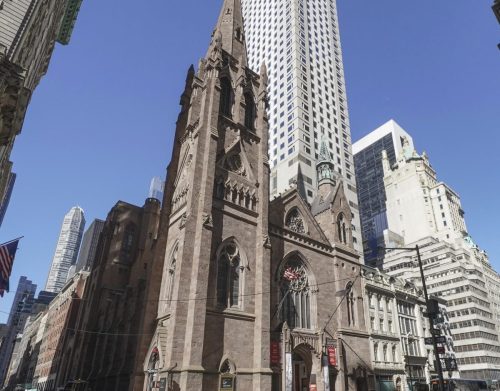
Anglican Watch issues warning about two Manhattan-area churches as it launches investigations of misconduct at both parishes
Anglican Watch is warning about potentially abusive/criminal conduct at two Manhattan churches as it launches investigations into allegations of misconduct at both. The allegations include both potential criminal conduct and clergy misconduct.
Fifth Avenue Presbyterian
Anglican Watch has received multiple credible allegations of misconduct at this church, which has a long history of sexual and spiritual misconduct. Among the claims we are presently investigating:
An alleged cover-up of a rape.
Sexual assault.
Obstruction of justice.
Witness intimidation.
Retaliation.
Adultery by a member of the clergy.
Defamation.
Civil and criminal conspiracy.
Additionally, there are issues of ecclesiastical qualifications, professional boundaries, and ministerial suitability.
The allegations share a common factual background, and we are evaluating a potential criminal referral to prosecutors in the area.
A screenshot relating to one of the allegations follows, and we have extensive additional evidence.
Rape allegations
St. Bartholomew’s aka St. Bart’s
While St. Bart’s has a less colorful history of misconduct, the current allegations are every bit as serious as those at Fifth Avenue Presbyterian. Specific allegations extend to a male priest employed by the church and include:
Obstruction of justice.
Witness intimidation.
Retaliation.
Defamation.
Civil and criminal conspiracy,
As with Fifth Avenue Presbyterian, the issues include ecclesiastical qualifications, professional boundaries, and ministerial suitability.
Historical allegations and prior controversies
Neither church is unfamiliar with controversy, though their documented histories differ substantially.
Fifth Avenue Presbyterian Church
Fifth Avenue Presbyterian’s history includes a major clergy sexual misconduct scandal involving former senior pastor Thomas K. Tewell.
In August 2005, Tewell took administrative leave following allegations concerning his relationship with a married female congregant. The Presbytery of New York City initiated an investigation.
The controversy escalated when congregant Joseph Vione filed a $5 million lawsuit alleging that Tewell had exploited his position as a marriage counselor to pursue a sexual relationship with Vione’s wife. The lawsuit also accused church officials of failing to investigate earlier warnings about Tewell’s conduct.
Subsequent court filings alleged that three congregants had complained as early as 2002 that Tewell was exploiting pastoral and marriage-counseling relationships to pursue women. Those allegations raised serious questions about professional boundaries, institutional oversight, and the church’s response to reported misconduct.
The controversy did not end there. A separate lawsuit brought by a woman who had participated in the church’s ministerial training program raised allegations concerning her relationship with Tewell, professional boundaries, and retaliation by Presbyterian authorities. The presbytery disputed her claims and defended its ecclesiastical decisions.
The documented history is particularly relevant to the current investigation because it involves allegations of clergy misconduct, abuse of pastoral authority, institutional failures, and retaliation. The earlier proceedings do not establish the truth of the allegations now under investigation.
St. Bart’s has a documented history of bitter institutional conflict, although we have not independently established a comparable history of clergy sexual abuse allegations at the parish.
During the 1980s and early 1990s, the church became embroiled in a prolonged dispute over plans to replace its community house with a commercial office tower. The controversy divided parishioners, clergy, and church leadership, sparked allegations of financial mismanagement, and led to extensive litigation.
The dispute included resignations, challenges to vestry decisions, and accusations concerning the conduct of church leadership. The proposed development ultimately failed following litigation over New York City’s landmark preservation laws.
Those controversies were not sexual abuse cases and should not be characterized as such. They nevertheless form part of the parish’s documented history of governance disputes and institutional conflict.
The allegations Anglican Watch is now investigating are separate and substantially more serious, involving potential criminal conduct, witness intimidation, retaliation, and questions about clerical suitability.
We have heard unconfirmed reports that the victim(s) in these cases may file civil suits against both churches and relevant clergy and are seeking further clarification. If those hurt by the churches wish to file suit, remember that some claims, notably defamation, are subject to statutes of limitations as short as one year. Thus, it is important to file promptly.
We will almost certainly see clergy disciplinary cases filed in these matters. That said, given the Diocese of New York’s unwillingness to follow the Title IV clergy disciplinary canons (including by making unauthorized findings of fact at intake), we are not sanguine about the prospects that the Heyd regime will suddenly start acting with integrity.
We are less familiar with the PCUSA clergy disciplinary process, but willing to help complainants in both cases.
We also plan to refer several allegations, along with supporting evidence, to prosecutors, including allegations about:
Rape.
Sexual assault.
Obstruction of justice.
Witness intimidation.
Retaliation.
Defamation.
Civil and criminal conspiracy.
We will, of course, fully support any resulting criminal investigation.
But no matter how the civil, criminal, and clergy misconduct aspects of these cases play out, there is more than enough information available to us to make us confident in the accuracy of the underlying complaints. As a result, we will name specific clergy, church members, and denominational officials who have allegedly participated in the underlying misconduct and will ensure that these allegations are part of any future employment discussions. Nor should anyone underestimate our tenacity when it comes to these issues.
We have also obtained access to a trove of emails in these cases, many of which are profoundly incriminating. Thus, neither the church nor its clergy should attempt to minimize, brush off, or lie about the underlying issues.
We will have additional updates as our investigations progress.
Sources
Anglican Watch, March 21, 2026 — Our previous reporting on allegations that the Episcopal Diocese of New York and intake officer Alison Quin violated Title IV disciplinary procedures by making factual determinations outside the scope of intake authority.
Anglican Watch, April 27, 2026 — Follow-up coverage documenting our objections to the diocese’s handling of a disciplinary complaint against Saint Thomas Church Fifth Avenue rector Carl Turner, including unauthorized fact-finding and disputed reliance on a litigation stipulation.
The Layman, August 2005 — Contemporary reporting on allegations involving Fifth Avenue Presbyterian senior pastor Thomas K. Tewell, his administrative leave, and the presbytery’s investigation.
The Layman, 2005 — Reporting on Joseph Vione’s $5 million lawsuit alleging sexual misconduct involving Tewell and failures by church authorities to address earlier complaints.
New York Supreme Court, 2006 — Judicial proceedings involving the Tewell controversy, including allegations concerning pastoral counseling, sexual relationships, and institutional responsibility.
New York Supreme Court, 2008 — Additional litigation records relating to the Fifth Avenue Presbyterian controversy and disputes involving church authorities.
The Washington Post, March 1991 — Contemporary coverage of St. Bartholomew’s unsuccessful effort to develop a commercial office tower and the resulting legal and institutional controversy.
The Battle of St. Bart’s, book review — Historical background on the bitter disputes over church governance, property development, and institutional leadership at St. Bartholomew’s.
New York Civil Practice Law and Rules § 215 — Statutory authority establishing a one-year limitations period for certain civil claims, including defamation, subject to applicable exceptions and other legal provisions.
The Episcopal Church, Title IV — Official clergy disciplinary framework governing intake procedures, investigation, referral, and adjudication of allegations against Episcopal clergy.
Presbyterian Church (U.S.A.) — Denominational information and resources concerning Presbyterian governance, ecclesiastical accountability, and disciplinary procedures.